
Article: Things to Look for When Buying Quality Jade | May's Jewelers

Things to Look for When Buying Quality Jade | May's Jewelers
Jade has been treasured for thousands of years, but not all jade is created equal. As a family-owned jeweler serving the Bay Area for almost 40 years, we've had the chance to handle a lot of jade, and to see how much quality can vary from piece to piece. Whether you're browsing our jade collection or shopping elsewhere, understanding what separates fine jade from mediocre or even fake material can save you from overpaying, or worse, buying something that isn't jade at all. Here are the six things every buyer should evaluate.
1. Color
Color is the single most important factor in determining jade's value. While most people associate jade with green, it actually comes in a range of colors: lavender, red, orange, yellow, brown, white, black, and gray. The most prized shade is a vivid, pure emerald green with no hint of gray, known as "Imperial jade." It's a color so rare and desirable it can command millions of dollars for a single piece. When shopping, look for a color that really strikes to you as beautiful.
2. Translucency
Jade's translucency ranges from completely opaque to semitransparent, and the finest material is semitransparent. Light that passes through it creates an inner glow that makes the color appear to come alive.
The least desirable material is opaque or has cloudy patches that break up its transparency. As a buyer, hold the piece up to a light source. Good jade should show some depth and glow rather than looking flat and chalky.
3. Texture
Jade's texture (how smooth and fine-grained it feels and looks) can range from fine to medium to coarse, depending on the size of its interlocking crystals. Finer texture produces a smoother surface, a higher polish, and a more pleasing feel in the hand. This same crystal structure is also what gives jade its legendary toughness, which is why it was historically used for tools and weapons before it became a gemstone.
4. Cut and Craftsmanship
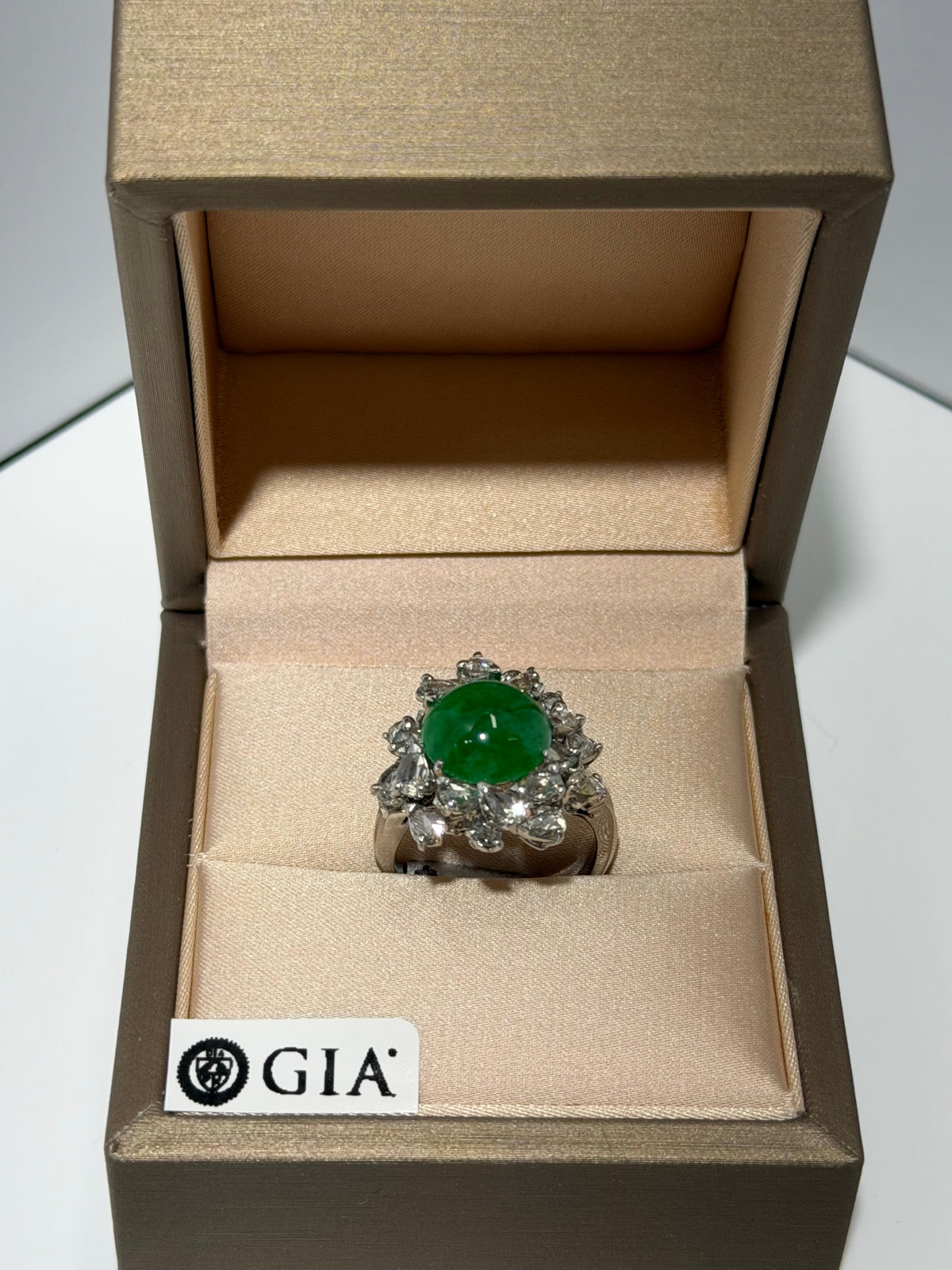
The finest jade is typically cut into cabochons for rings and jewelry, and top-quality material is rarely cut to standardized sizes because the cutter's priority is preserving as much of the original rough as possible. For bangles, one of the most traditional jade forms, check whether the piece is a "hololith," carved from a single piece of rough. Hololith bangles cost more than those made from multiple pieces joined with metal hinges, since a single-piece bangle results in much greater weight loss during carving.
Good craftsmanship also means symmetry, even proportions, and a polish free of scratches or distortion in the surface reflections.
5. Treatment Type (A, B, or C Jade)
This is the factor that trips up the most buyers, and the one most likely to affect what you should pay. In the jade trade, jadeite is classified into three categories based on treatment:
- Type A: Natural, untreated jadeite. Traditional waxing to enhance luster is accepted and doesn't count as a "treatment."
- Type B: Bleached and impregnated with polymer resin to remove impurities and improve transparency. When done poorly, this weakens the stone's structure, and the color and shine can fade or become brittle over years.
- Type C: Dyed to add or intensify color. The dye typically fades over time.
The price gap between natural Type A and treated jade can run 100 to 1 or more for pieces that look similar to the naked eye. Since treatment often can't be spotted reliably without lab equipment like infrared spectroscopy, always ask your seller directly whether a piece is natural (Type A) and request documentation.
6. Certification and Lab Reports
Given how easy it is for treatments and imitations to fool the naked eye, a lab report from a recognized gemological institute is the closest thing to a guarantee you can get. Reputable labs such as the Gemological Institute of America (GIA) use methods like infrared and Raman spectroscopy to confirm whether jadeite is natural, polymer-impregnated, or dyed, and issue reports that explicitly state the treatment category. For any meaningful purchase, ask whether the piece comes with, or can be sent for, a certified lab report confirming it's natural, untreated jadeite. One exception is red jade - there are no gemological tests that can identify the origin of color for red jade, but jewelers are able to infer the absence of dye if the red jade piece has not been polymer impregnated.
The Bottom Line
Fine jade is judged first on color, translucency, and texture, in that order of impact on value, then refined by cutting quality, and, critically, whether the stone has been treated. When you're shopping, don't be afraid to ask questions. A trustworthy seller will be transparent about treatment status and happy to provide certification for higher-value pieces.
At May's Jewelers, every piece in our collection is hand-selected with the same care and honesty we've brought to the Bay Area since 1988. If you have questions about a jade piece you're considering, or you'd like to see our curated jade selection in person, reach out or stop by our San Francisco showroom. We're always happy to talk jade.